



Why Advertising Isn't Broken (But Your System Probably Is): The Simple Machine Every Hypnotherapist and Coach Needs
Dean Graziosi said it best at Traffic and Conversion Summit, and I've never forgotten it. When someone complains that advertising doesn't work, it's like pointing at a plane crash and declaring that aerodynamics is a fraud. Planes fly. Advertising works. The question is never whether the mechanism functions—it's whether your version of it is built correctly.
I hear this from practitioners constantly. They're brilliant at what they do. They've helped people quit smoking, overcome crippling anxiety, navigate grief. But when it comes to building a pipeline of clients, something breaks down. They run a few ads, get nothing, and conclude the whole enterprise is a scam.
That conclusion is wrong. And I want to show you exactly why.
The Real Confession Hidden in "Advertising Doesn't Work"
Recently, we received an email from Tommy, a hypnosis and coaching practitioner with over 10 years of experience in the UK. He's excellent at his craft—he told us so, and based on the client feedback he described, I believe him. But he was frustrated. He retreats whenever he tries to grow. He avoids social media. He asked us: "How long should I give advertising before deciding it's not working?"
That question contains a loaded presupposition—that advertising is the variable under examination. But buried at the bottom of his email was the actual problem. He told us he has a half-finished website, no online booking system, and no real system for getting clients.
So what exactly is he advertising? Where are those people landing? What happens when they arrive? What follows up with them?
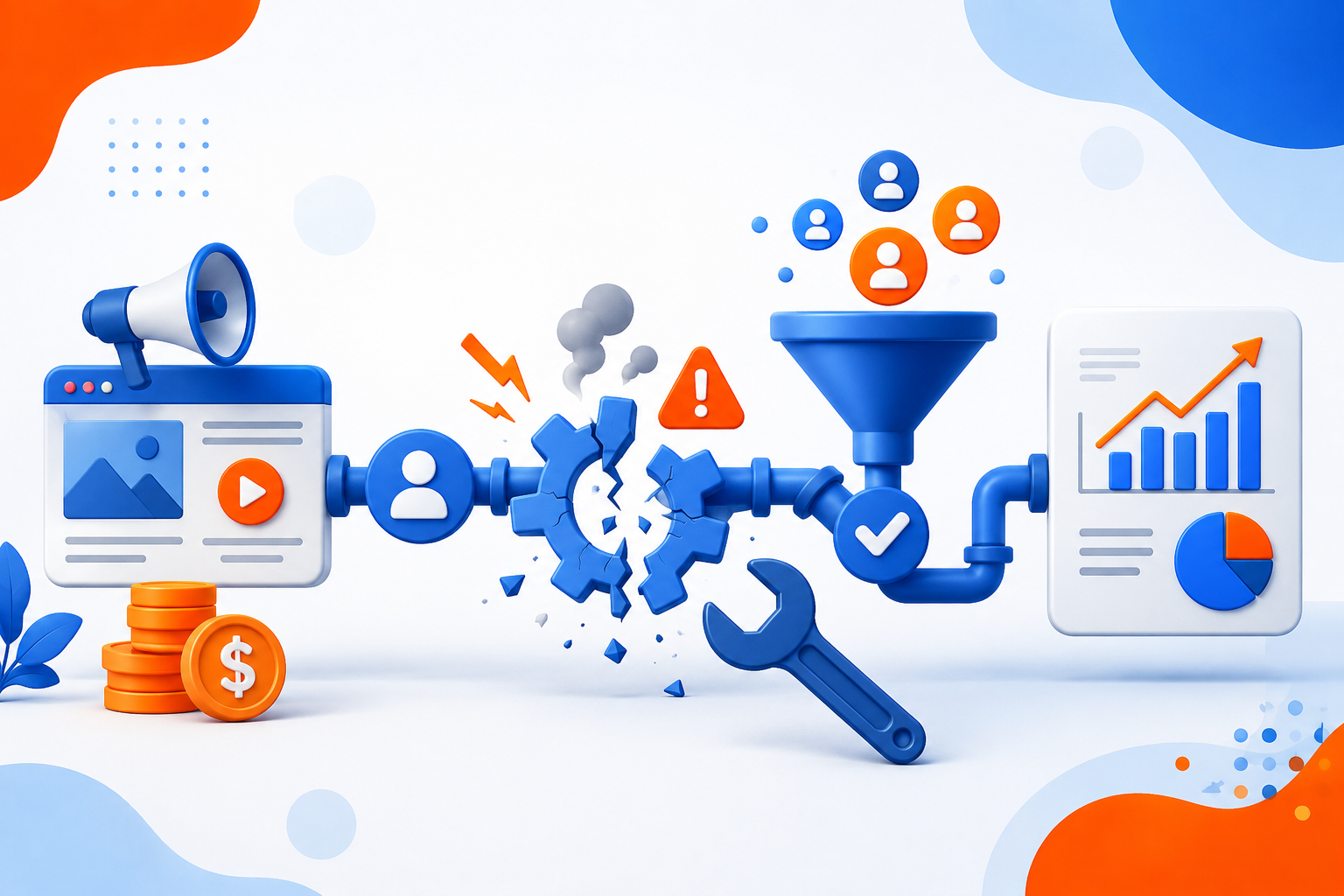
Nothing. And that's not an advertising problem. That's a system problem.
"If advertising isn't working for you, it just means that something is broken in that process."
Think about how Saturday morning cartoon commercials worked on every single one of us as kids. We'd see a toy ad, sprint to our parents, and beg for it by Christmas. The advertising worked perfectly. It moved us through a sequence—awareness, desire, action. That sequence is what we need to replicate, deliberately and systematically, in our practices.
What the Simple Machine Actually Looks Like
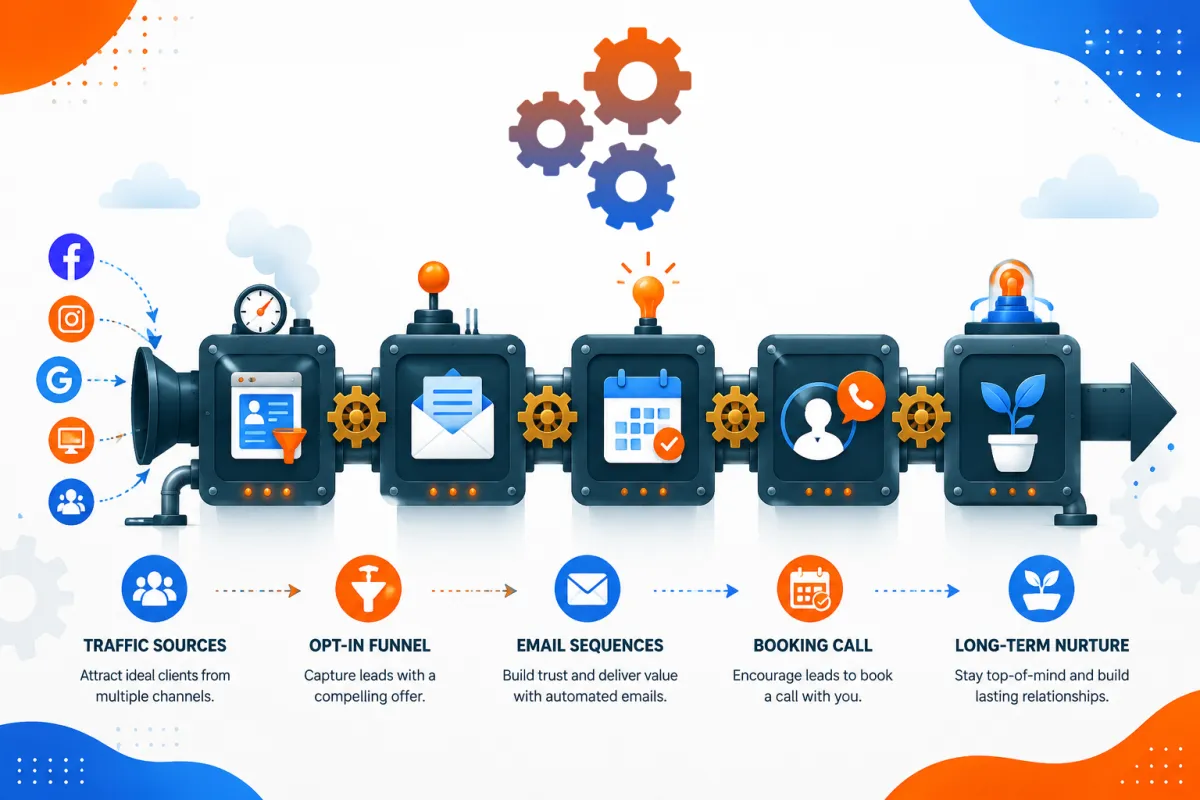
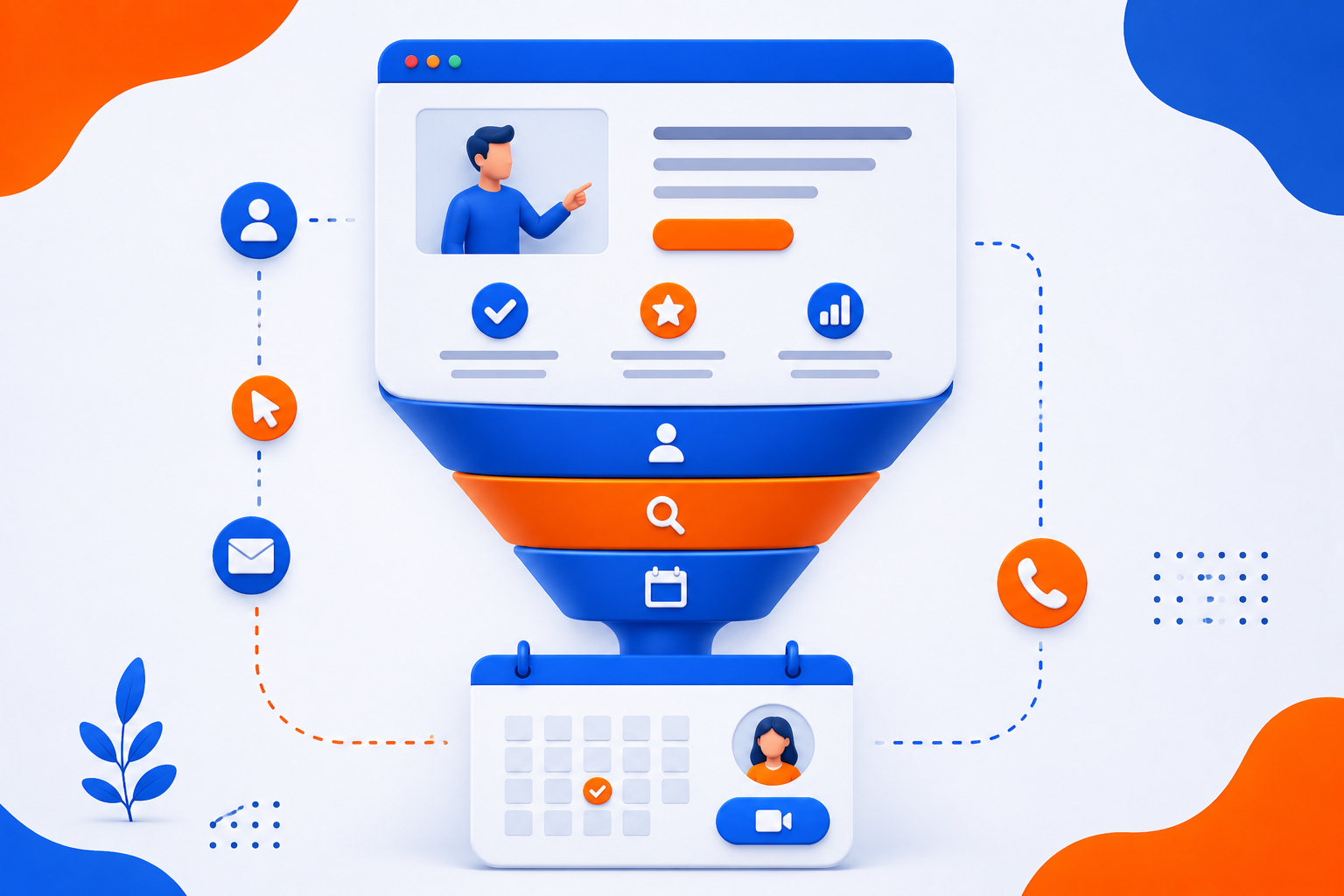
When Timothy and I built out what we call the Simple Machine inside the Pykthos Mastermind, we weren't inventing something new. We were mapping the logical sequence that every successful client-getting system follows. Here's how the pieces connect.
Step one is traffic. This can come from anywhere—Facebook ads, Google, organic content, a meetup.com event, a networking group in your community, a speaking engagement. The source doesn't matter as much as the fact that people are finding out you exist.
Step two is the opt-in funnel. Traffic flows to a specific page offering something of genuine value in exchange for contact information—usually a name, email, and sometimes a phone number for SMS follow-up. This is your lead magnet. To Jonathan's question about whether to combine a free PDF download with a discovery call booking into one funnel: don't. These should be separate funnels serving separate purposes. The opt-in funnel collects the contact. The booking funnel converts the lead.
Step three runs two sequences in parallel. The moment someone submits their information, two things should trigger automatically. First, a short-term engagement sequence—you deliver what you promised, you build rapport, you introduce the next logical step. The last thing you want is a lead magnet that ends with "we'll be in touch." That's a relationship killer. Second, an indoctrination sequence. I learned this framework from Ryan Dice at DigitalMarketer.com. It's typically three emails that welcome someone into your universe—your story, your best content, your case studies. You're not selling yet. You're orienting.
Step four is the booking funnel. Both sequences point toward one outcome: getting the person to book a discovery call with you. This is the heartbeat of the whole machine. Everything else exists to feed people into this moment.
Step five is long-term nurture. Here's the uncomfortable math. Only about two to three percent of your ideal market is ready to buy right now. The other ninety-seven percent might buy later—some of them much later. One of our Mastermind members, Patrick, joined the Mike Mandel Hypnosis Academy when we launched it in June 2013. He came to our in-person training in Toronto more than ten years later. That's what nurture does. It keeps the relationship warm until someone is ready. Long-term nurture emails should be evergreen—no references to current news that will make them inaccurate in six months—and they should come once or twice a week, consistently delivering value and occasionally reminding people to book a call.
The Dating Analogy That Explains Everything
Timothy framed it perfectly. Advertising is like walking up to someone you're interested in and asking for their phone number. They say yes. They text you. And then you leave your phone on silent and have no idea what to do next.
That's Tommy's situation. That's a lot of practitioners' situation. They're generating some interest—Tommy admitted he is getting clients somehow—but there's no systematic follow-up. No nurture. No automated pathway that keeps the conversation moving when you, the human, aren't available to personally shepherd each prospect.
The fix isn't a better ad. The fix is building the machine that the ad feeds into.
One Kick at a Time: Why You Don't Need to Build Everything Today
Here's where practitioners get overwhelmed. They look at the Simple Machine and think they need to build all five components before doing anything. They don't.
Imagine a little kid kicking a soccer ball down a full-size pitch. They can't kick it the whole length of the field at once. They kick it forward, walk to it, kick it forward again. That's exactly how to build this system.
Start with the booking funnel. Just that. A page where someone can learn what you do and schedule a call with you. Don't worry about the lead magnet opt-in yet. Don't stress about the long-term nurture sequence. Get the booking funnel live. That's the minimum viable machine.
Then ask yourself: what's the method you're currently using to get clients? Something is working—even if it's word of mouth, or a referral here and there. Start there. Understand that mechanism. Then build one piece of the Simple Machine around it.
For someone like Marianne, who is still completing her hypnotherapy training, even simpler is better. Before any funnel: define who you want to help, define the outcome they want (not the methodology you'll use to deliver it—clients don't care that you're a certified mindscaping practitioner, they care that they'll stop being afraid of public speaking), and create a very simple way for people to contact you. That could be as basic as a Google document explaining how to work with you.
The Conversation Is the Conversion
Every piece of the Simple Machine exists to do one thing: start more conversations. Because the more conversations you have, the more opportunities you have to discover what your clients actually want, and the more natural your sales process becomes.
Nobody likes being sold to. But people love being understood. When someone reaches out to you because your content spoke directly to their problem, you're not selling them—you're completing a sequence they started themselves. And once you're in that conversation, you ask permission before transitioning to an offer. On every discovery call, before you ever discuss investment, you say: "Would now be a good time to talk about how we could work together, and what that would look like?" A yes to that question is permission to sell. It changes everything.
Build the List. Talk to It. Repeat.
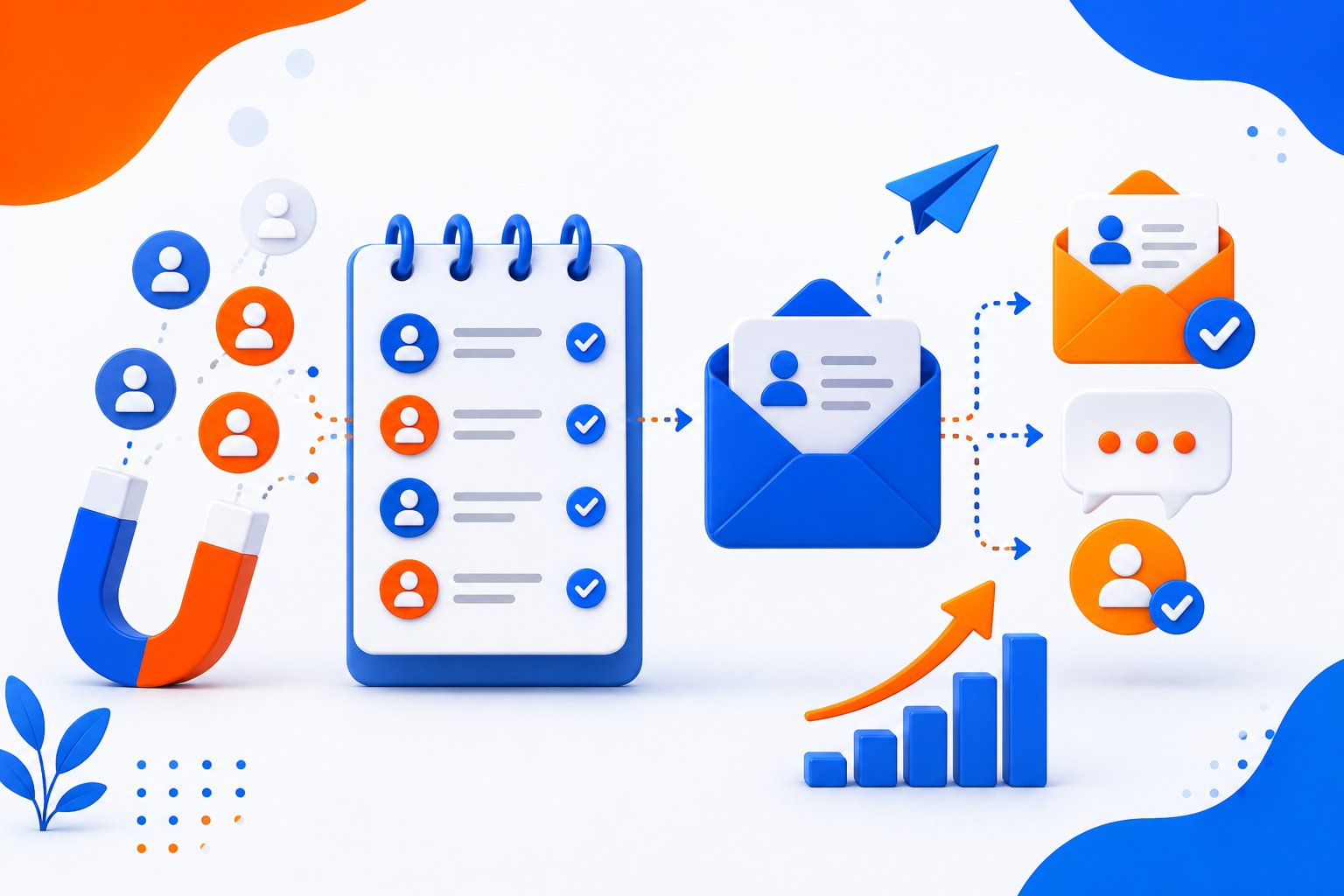
If you take one thing from this, let it be this: start building a contact list today, and communicate with it consistently. It doesn't have to be sophisticated. A Mailchimp account. A spreadsheet. Even a Gmail distribution list if that's where you are.
The practitioners who feel like they've tried everything and nothing works are almost always the ones who aren't nurturing a list over time. They launch something, get no immediate traction, and quit. But the people who become raving clients often do so after months or years of quietly consuming your content. They feel like they already know you. They trust you before they ever speak to you. And when they're finally ready, they don't shop around—they come straight to you.
That's what the Simple Machine is designed to build. Not a viral moment. Not an overnight transformation. A steady, compounding relationship with the right people over time.
And that is completely within your reach, starting today.
Ready to see the Simple Machine in action? Join us live at pykthos.com/cafe every other Friday, where we break down exactly how to implement this framework for your specific practice.


