



Why Your 100 Leads Only Booked One Call (And How to Fix It)
We had a moment during our last Strategy Cafe that I need to tell you about, because I guarantee some of you are making the exact same mistake.
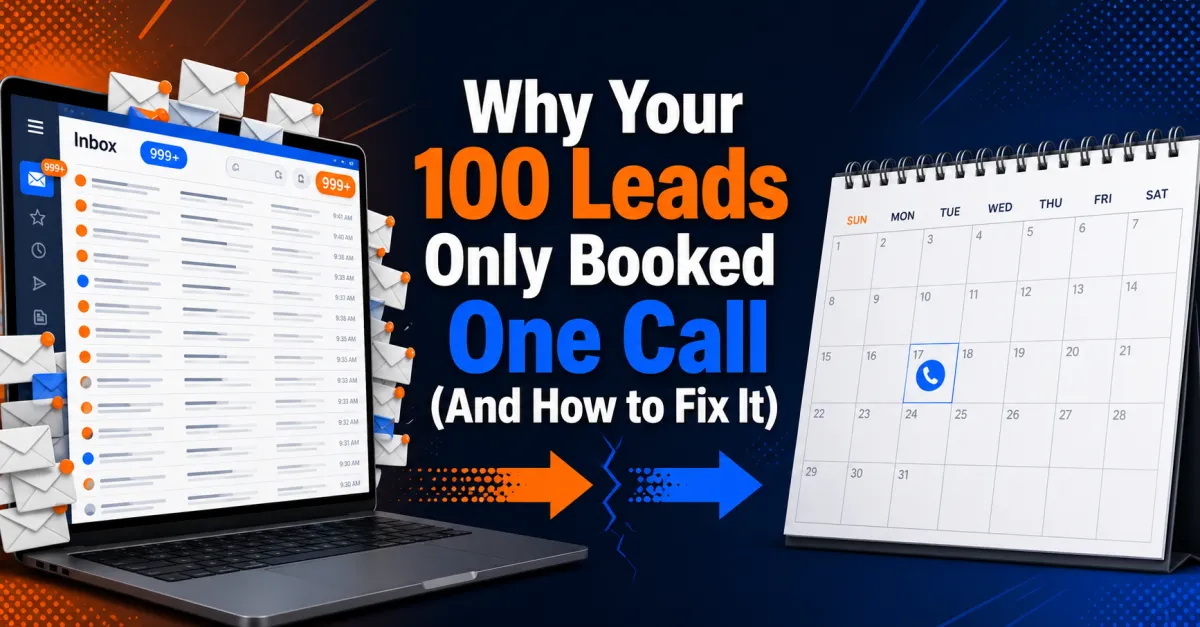
Mikhail raised his hand and said, "I have more than 100 leads from the last 10 days. I can track everything - who opens, who clicks. But I only have ONE discovery call booked."
I've seen this scenario play out dozens of times. Someone finally figures out how to generate leads. The traffic is flowing. The opt-ins are happening. Everything looks great on paper.
Then reality hits: leads aren't clients.
What happened next in our conversation is going to save you months of frustration and probably thousands of dollars in wasted ad spend.
The Setup That Looked Perfect
Let me give you the context. Mikhail was running Facebook lead ads targeting people who want to quit smoking. Smart niche - people are motivated, they're searching for solutions, and they're willing to invest in themselves.
His cost per lead was around $5. Not bad at all for that market.
He had automation set up. Leads were getting immediate emails. He could track open rates and click-through rates. He had a video in there. He had a questionnaire.
On the surface, everything looked like it should work.
But here's what was actually happening: people would fill out his Facebook lead form (which already asked them questions about their smoking habits), and then his follow-up email would ask them to... fill out another quiz.
And THEN they could book a discovery call.
Do you see the problem yet?
The Homework Problem Nobody Talks About
Timothy jumped on this immediately. "Wait," he said. "They fill out your lead form with questions about how much they smoke, how long they've been smoking, why they want to quit. Then in your email, you're asking them to do another quiz?"
"Yes," Mikhail confirmed. "Or they can go straight to the discovery call."
"You're giving them extra homework," Timothy said. "They just did homework. Now you're asking them to do MORE homework before you give them anything in return."
This is what I call violating the law of reciprocity.
Think about it from the prospect's perspective. They saw your ad, probably while scrolling during lunch or sitting on the couch. They were in a specific headspace - frustrated about smoking, wanting to quit, hoping you had a solution.
They filled out your form. That took effort. They gave you their information. They answered your questions.
And what did they get in return? More questions.
It's like going to a restaurant, ordering food, and the waiter brings you a survey asking what you might want to eat.
The Cup Metaphor That Changes Everything
I use a simple metaphor to explain this. Imagine you have a cup. Every time you give someone value - a useful insight, a helpful resource, an answer to their question - you deposit a coin in that cup.
Every time you ask them to do something, you withdraw a coin.
If the cup ever gets empty, that lead is gone. They'll unsubscribe. They'll ghost you. They'll mentally check out even if they technically stay on your list.
Mikhail's cup was empty before he even started.
His leads filled out a form expecting something valuable. Instead, he handed them more forms.
No wonder only one person out of 100 booked a call.
The Ego State Switch Nobody Considers
Here's something else that was happening - and this applies to everyone reading this.
The person who saw Mikhail's ad and filled out his form was in a specific ego state. Maybe they just finished a cigarette and felt disgusted with themselves. Maybe they were thinking about their kids and wanting to be healthier. They were motivated in that moment.
But the person reading the follow-up email three hours later? That's a completely different ego state.
They're at work. They're thinking about dinner. They're distracted by a text message. The motivation they felt when they opted in has evaporated.
You can't assume they still have that same drive and focus.
This is why your follow-up needs to re-engage them, remind them why they were interested, and build new momentum. You can't just capitalize on momentum that's already gone.
What We Told Mikhail to Do Instead
The fix was actually pretty simple, but it required completely rethinking his approach.
First: Stop asking before giving. That immediate email needs to deliver something valuable. Not another quiz. Not more questions. Actual value.
Timothy suggested: "Give them a lead magnet. Something small, digestible. A 5-minute video. A checklist. A 10-minute hypnosis audio they can use tonight. Something that makes them feel like they got value for filling out your form."
The law of reciprocity has to kick in. They did something for you (gave you their contact info), now you do something for them.
Second: Look for signs of life before asking for big commitments.
I mentioned this technique I learned from Lauren Petrullo, who runs ads for Mike Mandel Hypnosis. She asks super simple questions just to get people to reply. Not big commitments. Just... engagement.
Something like: "I'm curious - how did you start smoking?"
Or: "Quick question - what was the hardest part the last time you tried to quit?"
You're opening a dialogue. You're looking for who's actually paying attention. Who's still interested.
Third: Fix the subject lines.
Mikhail mentioned that one email had 43 views but only 4 opens. That's a subject line problem.
Your subject line is the gatekeeper to everything else. Doesn't matter how good your email is if nobody opens it.
Timothy's advice: "Go into ChatGPT or Claude. Give it your current subject line and ask for 3-5 variations. Then split test them."
But here's the key for re-engagement emails specifically - make them look like they're from a real person.
The Re-Engagement Email That Actually Works
"Write a really short email," Timothy told him. "Two sentences max. No images. No fancy formatting. Plain text that looks like it came from you personally."
The example he gave: "Hey, you signed up for my list a while ago. I'd love a reply - just let me know where you're at in your journey with quitting smoking."
That's it.
No pitch. No links. No elaborate call to action.
Just a simple, human question that invites a response.
Someone in the chat (Tai, I think) suggested another version: "Are you still interested in quitting smoking?"
Simple. Direct. Respectful.
These plain-text emails outperform elaborate campaigns because they feel human. They break through the noise of every other marketing email screaming for attention.
The Follow-Up Sequence We Mapped Out
By the end of the conversation, we'd essentially redesigned Mikhail's entire approach.
Immediate email: Deliver the value you promised. Give them something they can use right now. A checklist. An audio. A video with your #1 tip. Something.
Day 1-2: Expand on that content. Share a related insight. Tell a story about someone who successfully quit. Still no pitch - just more value.
Day 3: Ask a simple question to get engagement. Look for signs of life.
Day 5: Share a case study. Explain your approach. Include a soft invitation in the PS: "If you'd like to explore working together, I offer discovery calls. You can book one here."
Notice the pattern? Give, give, give, soft ask.
Not: ask, ask, ask, wonder why nobody's responding.
The Long Game That Most People Skip
Here's where most people give up. They run a sequence for a week, get minimal results, and conclude it doesn't work.
But one of our mastermind members, Jan, dropped a comment in the chat that perfectly illustrates why the long game matters:
"I had a lead that I kept sending information to at least once a month. Finally, THREE YEARS later, they got back with me. This person had a bunch of stuff going on in his life and still remembered me as time was passing. When his need became overwhelming and at the right time for him, he contacted me and became a client."
Three years. Monthly emails. One converted client.
Was it worth it? Absolutely.
Because the alternative was that person forgetting about Jan entirely when they were finally ready to get help.
This is why you need a long-term nurture sequence. At least one valuable email per week. Not sales emails. Valuable emails.
My standard: I want people to read it and think, "That was so good I want to keep this email."
Answer common questions. Share useful frameworks. Tell relevant stories. Provide quick wins.
You can include a PS reminding them about discovery calls, but the email should be valuable enough to stand alone.
The Testing Mindset That Makes the Difference
Toward the end of our session, I told Mikhail: "Come back in three weeks. Show us the map of what you're doing. Bring your numbers. We'll help you figure out where to optimize."
This is the difference between people who succeed with this stuff and people who don't.
The ones who succeed treat it like a science experiment. They form hypotheses. They make one change at a time. They measure. They learn. They iterate.
The ones who fail make random changes, don't track anything, give up after two weeks, and conclude "email marketing doesn't work."
Mikhail actually did something smart that most people miss: he tested his own system. He went through the process himself and discovered, "Wait, this isn't working the way I thought."
Most people launch and then scramble to fix things when customers start complaining. Mikhail caught his issues before anyone got upset.
That's the right mindset.
What You Should Do Right Now
If you're sitting there with leads who aren't converting, here's what I want you to do:
First: Map out your current system. Actually draw it. What happens when someone opts in? What's the next step? And the next? Where are you asking versus giving?
Second: Look at your cup. Are you depositing more than you're withdrawing? Or are you asking people to do homework before you've given them anything?
Third: Check your subject lines. Are people even opening your emails? If not, that's your first problem to fix.
Fourth: Send a simple re-engagement email to your cold list. Plain text. Two sentences. Just ask where they're at.
Fifth: Start measuring. You can't improve what you don't measure. Track your open rates, click rates, and booking rates. Know your numbers.
Mikhail came to us with 100 leads and one call. By the time you read this, I expect he'll have a very different story to tell.
Because the fix isn't complicated. It's just about giving before asking, staying consistent, and playing the long game.
Most people won't do it. They want the quick win, the magic formula, the secret hack.
But the people who actually build sustainable businesses? They're the ones who show up, add value, measure results, and keep improving.
That's it. That's the whole secret.
Want to work through your specific conversion challenges with us? Join our free Strategy Cafe sessions every other Friday at pykthos.com/cafe. We troubleshoot real businesses with real problems. No pitch, just help.


