




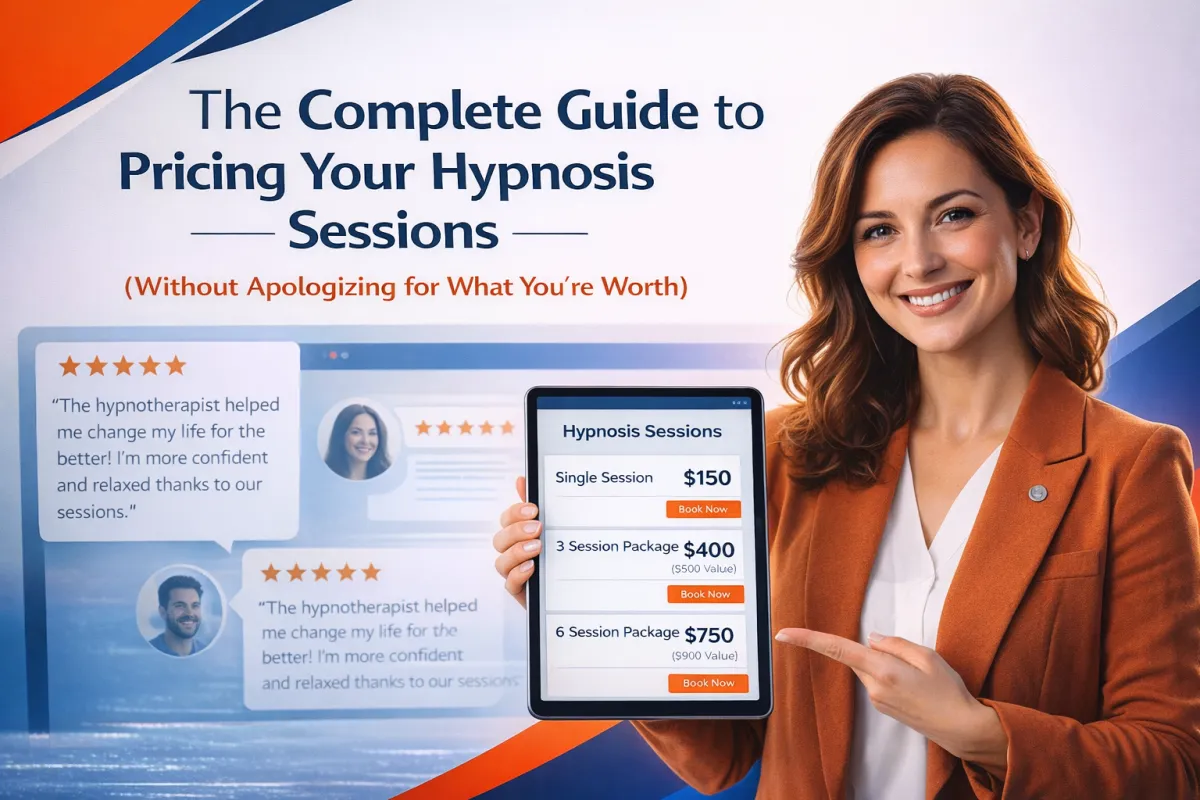
The Complete Guide to Pricing Your Hypnosis Sessions (Without Apologizing for What You're Worth)
One of our community members, Joe, asked the question that keeps new practitioners up at night: "How do you find the sweet spot of what you should start charging people?"
He came in thinking $500 per session, influenced by the wisdom that if you charge a lot, you know clients are at threshold. But he was also seeing conflicting advice about starting with free sessions to build momentum.
Sound familiar?
Let me walk you through exactly how to price your services, from day one to established expert, without the confusion or second-guessing.
The Local Competition Research Method

Before you set a single price, you need data. Not gut feelings. Not what feels comfortable. Actual market data.
Here's your research checklist:
Step 1: Identify Your Local Competition
Google "hypnotist near me" or "hypnotherapy [your city]". Make a spreadsheet with:
Practitioner names
Their websites
Visible pricing (if available)
Number of testimonials
Years in practice
Specialties offered
Step 2: Analyze Their Positioning
Look at how they present themselves:
What language do they use?
What problems do they focus on?
How professional is their web presence?
What credibility markers do they display?
Step 3: Find the Pricing Sweet Spot
Once you know what your local competition charges, here's the formula:
Charge 20-40% MORE than the average local rate.
Wait, what? Charge MORE when you're just starting?
Yes. Here's why.
The Authority Pricing Principle
When you charge more than your competition, you automatically position yourself as the expert. Nobody looks at your pricing and thinks, "Well, they're overcharging."
They think: "They must be better. They must have something the others don't."
This is basic consumer psychology. We associate price with value. Higher price signals higher value.
During our call, I explained it this way: "Nobody knows what to charge in our industry. So by becoming the expert and being the authority in your area, that's gonna bring you more clients. They're going to come in at threshold because they're gonna have to spend the extra money."

The $500 Minimum Rule
For online practitioners not competing in a local market, here's the baseline:
Never charge less than $500 per session.
Why $500?
1. It pre-qualifies clients. People who complain about your price would complain at any price. They're not at threshold. You want clients who see the value and are ready to invest.
2. It reflects your true value. You're not just selling an hour of time. You're selling years of training, hundreds of hours of practice, expertise in transformation, and the value of the result they're getting.
3. It covers your real costs. Your pricing needs to account for the funnel setup, becoming an expert, marketing costs, platform fees, taxes, and your time in client acquisition—not just session delivery.
As I told the group: "You deserve to be paid what you're worth. You absolutely do. And anybody that tells you otherwise, they are the ones that can't get people to pay them what they're worth."
The Testimonial-Building Strategy
But what if you're brand new and don't have social proof yet?
This is where strategic free sessions come into play—but not the way you think.
The Free Session Framework:
Purpose: Building credibility and gathering testimonials
Not: Building a client base or proving your worth
Timeline: 2-3 months maximum
Volume: 5-10 sessions total
Target: Get 5-6 strong video testimonials
Process:
1. Offer free sessions to people in your network or practice community
2. Make it clear this is a limited-time opportunity
3. Deliver exceptional results
4. Ask for detailed testimonials and permission to use their story
5. Once you have 5-6 testimonials, stop offering free sessions
The Premium Pricing Confidence Hack
Tai shared a breakthrough moment on our call: "I had a sales conversation over the weekend, and when the client challenged me on price, I felt... nothing. Like, that's my price, dude."
He charges $250 CAD per session. When the client pushed back, Tai didn't flinch. He even mentioned he was thinking of raising his prices soon.
That's the energy you want.
How do you get there?
Build Your Value Stack
Write down everything that goes into a session with you:
Your formal training and certifications
Years of practice (including practice sessions)
Specialized techniques you've mastered
Your unique approach or methodology
Pre-session preparation and customization
Post-session support and follow-up
The transformation clients receive
What it would cost them NOT to solve this problem
When you see everything you're actually delivering, $500 starts to feel like a bargain.
The Package Pricing Strategy
Most successful practitioners don't sell single sessions. They sell packages.
The Standard Package Structure:
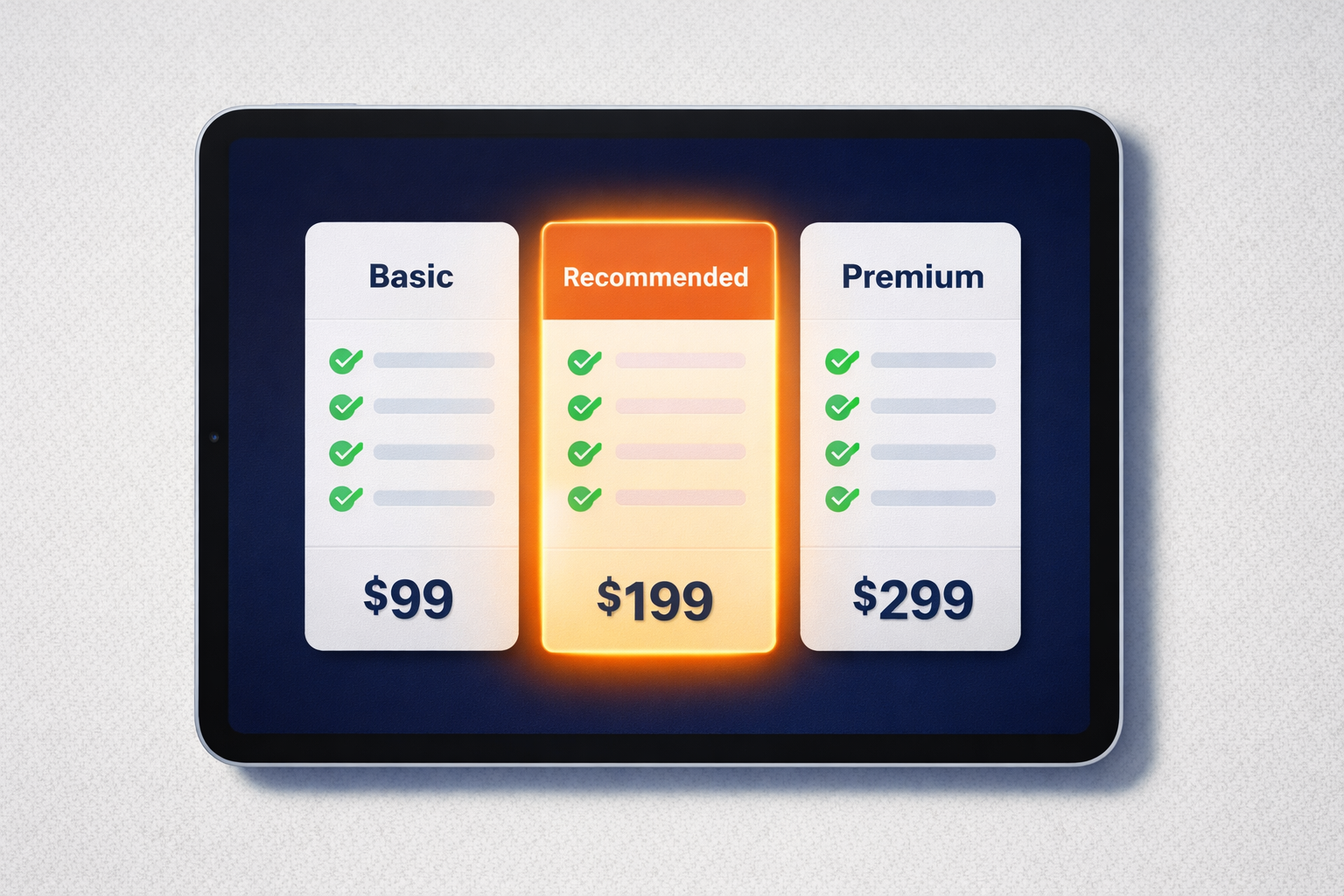
3-Session Package: $1,500 (minimum)
5-Session Package: $2,400 (create urgency)
Single Session: $600 (make packages more attractive)
Notice how the single session is priced higher per session than the package? This is strategic. You want clients to see the package as better value, which it is—for both of you.
Packages create:
Commitment from clients (better results)
Predictable revenue for you
Permission to do deeper work
Stronger testimonials and case studies
The Insurance Trap (And How to Avoid It)
Casper brought up a challenge many practitioners face: clients expecting to use insurance.
Here's what he learned: "The amount they want to pay you is so minimal, it's not worth the effort."
Insurance companies might reimburse $20-40 for what they call "counseling." That's not sustainable.
The Solution:
1. Be upfront: Make it crystal clear on your website and intake forms that you're a cash-pay business
2. Educate referring physicians: If you get doctor referrals, make sure they know your services aren't covered by insurance
3. Have a filter: Create a simple survey question: "I understand that insurance does not cover [your service] and this is a cash-pay service. Yes/No"
4. Offer payment plans: If someone truly can't afford your full fee but you want to help them, offer a payment plan—not a discount
The Charitable Model That Actually Works
Tim shared a beautiful approach: offering one free session per week to veterans in honor of his best friend Scott.
But we refined this into something even more powerful: the one-for-one model.
Instead of just giving away free sessions, what if you made it part of your business model?
"For every session purchased, I provide a free session to a veteran in need."
Now your clients feel like they're contributing to something bigger. You've elevated from commodity service to mission-driven business.
And here's the kicker: statistically, only about 20% of people who receive a free session offer actually take you up on it. So even if you sell 100 sessions, you're probably only delivering 20 free ones.
But imagine the goodwill. Imagine the testimonials. Imagine the referrals from grateful veterans who experienced transformation.
That's marketing gold.
The Price Objection Reality Check
Let me share something that might sting a little, but you need to hear it:
If anybody complains about your price, they would complain about it at $100, at $10, at $1.
It's not the price. It's them.
They're using price as an excuse to not move forward with the change that scares them. They're not at threshold. They're not ready.
And that's okay. They're not your client.
Your ideal client sees your price and thinks: "That's it? For this kind of transformation? Where do I sign?"
That's the client you want. That's the client who gets results. That's the client who sends referrals.
The Focus Group Pricing Test
If you're genuinely unsure what your market will bear, run a focus group.
Offer a free group hypnosis session. Before you deliver the session, use it as market research:
"Who here resonates with [problem statement]?"
"What would be beneficial for you?"
"What's a price you know for certain you'd be willing to pay if I could solve this today for you?"
Record the session (with permission). Take notes on their exact words. Feed it to AI for analysis.
Now you have real data from real potential clients.
Your Pricing Action Plan

If You're Local:
1. Research 5-10 local competitors
2. Find the average price in your area
3. Price yourself 20-40% higher
4. Build 5-6 testimonials through strategic free sessions
5. Launch with confidence at your premium price
If You're Online:
1. Start with $500/session minimum or $1,500 for three sessions
2. Build testimonials through practice community or network
3. Test problem statements on social media
4. Once you have 5-6 testimonials, go live with paid offerings
5. Adjust based on market response, but never go lower—only higher
The Golden Rule:
Whatever you decide to charge, commit to it for at least 90 days. Don't waiver. Don't discount. Don't apologize.
Your price is your price.
If someone challenges it, you can feel nothing—just like Tai did—because you know your worth.
Ready to price your services with confidence and build a thriving cash-pay practice? Join the Pykthos Mastermind where we help practitioners build sustainable businesses without apology. Join here: https://pykthos.com/mastermind


