



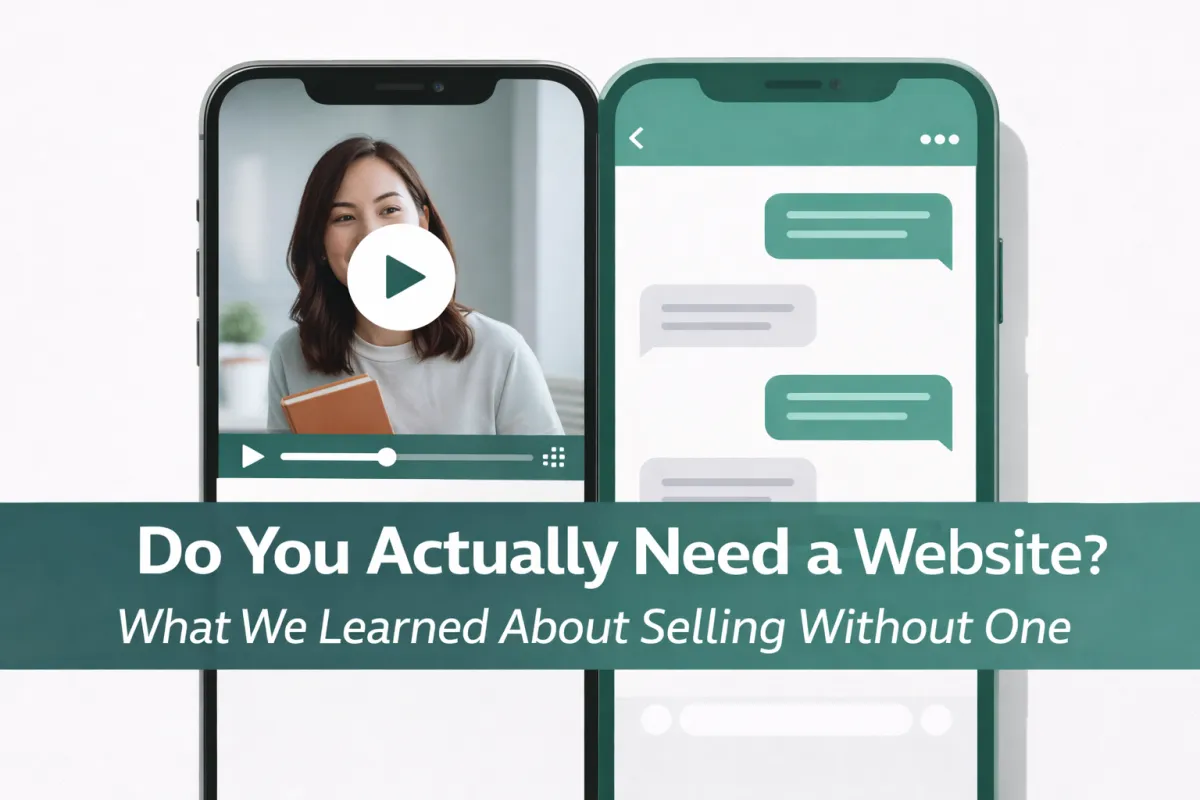
Do You Actually Need a Website? What We Learned About Selling Without One
Bradley asked a great question on our call this week:
"I'm on week 10 of building my YouTube channel. I've got a funnel for booking calls. Do I need a website yet?"
The short answer? No.
But let me explain why, because this goes against everything we used to teach about building an online business.
The $280,000 Text Message Story
Let me start with a story from our Nashville mastermind that perfectly illustrates this.
Our friend Cornet and Perry Belcher launched a $10,000 package at a conference. They mentioned it on stage and gave people a way to text them.
Cornet didn't even have an American phone number. He went to an Apple Store, bought a new iPhone with a US number, and started responding to texts.
Final result? 28 sales. $280,000 in revenue.
No website. No funnel. Just a pitch and text conversations.
Now, I'm not saying this is the only way to do it. But it shows you what's possible when you focus on the right things.
What You Actually Need Instead of a Website
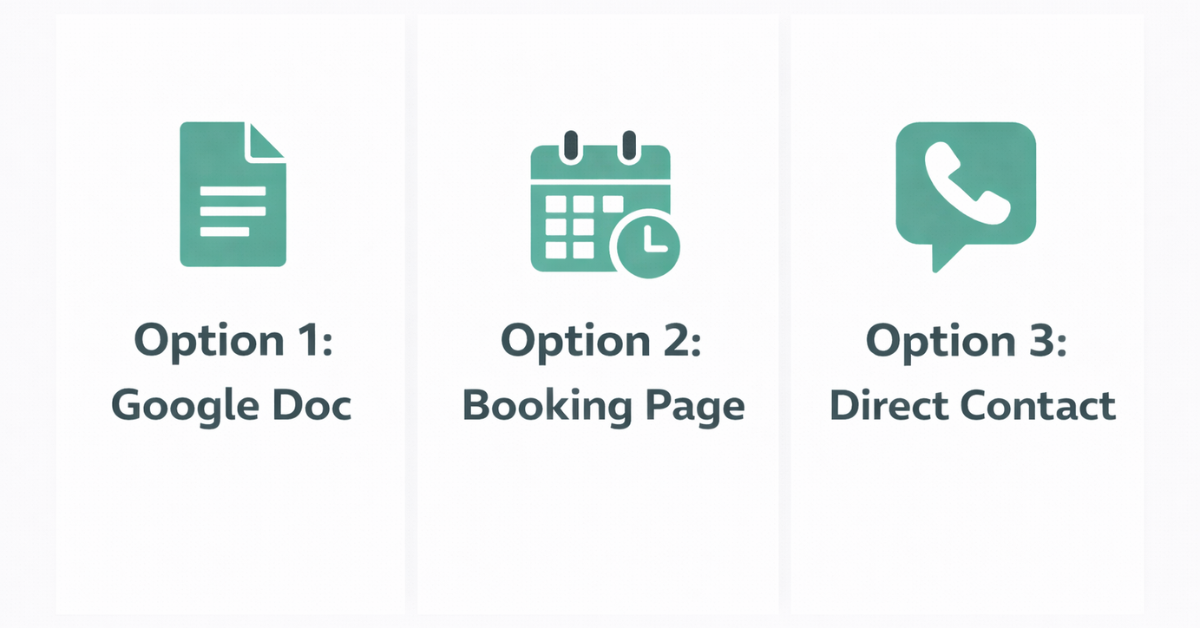
Here are three approaches that are working right now:
Option 1: The Google Doc Approach
Perry Belcher does this with his YouTube strategy. In the video description, he just puts a link to a Google Doc that explains his offer.
No fancy landing page. Just a document that walks people through what he does and how to work with him.
You can have AI help you write this. Just describe what you do, who you help, and what action you want people to take. Publish it with public sharing settings so anyone can view it.
People don't resist Google Docs because they don't feel "salesy." It's just information.
Option 2: Just a Booking Page
Skip everything else. Create one simple page with a booking calendar.
Your YouTube videos do the selling. Your booking page just collects the appointment.
That's what Bradley is doing right now, and it's working fine.
Option 3: Direct Contact
Include your phone number in your content. When people reach out, start a conversation.
Text messages have an 80% open rate compared to 20-30% for email. People read their texts.
Perry Belcher has been giving out his personal cell phone number at public presentations for over 10 years. And it still works.
The Video Strategy That's Working
Since we're talking about not needing a website, let's talk about what you DO need: video content.
One of our mastermind members, Charles, showed us his Instagram. He runs paid traffic to videos that get tens of thousands of views - simple videos of him talking, answering objections, sharing insights.
Here's what he does:
He creates 20-25 helpful videos answering common questions and addressing objections. Then he sets up a sequence where once someone watches 3 seconds of any video, they never see that one again. They automatically get shown the next video.
By the time someone books a call with him, they feel like they already know him.
He also does something smart on his thank-you pages. After someone opts in for his lead magnet, the thank-you page has a FAQ section in video format. Main questions first, then as people watch, it goes deeper into objections.
He's selling himself through video without being pushy at all.
What About Video Length?
This came up on our call, so let me address it.
Short-form videos (60 seconds or less): Think of these as headlines or appetizers. One quick insight or story. Goal is to make people want to know more about you.
Long-form videos (8-12 minutes or more): This is where you build authority and trust. Go deep on topics your audience cares about.
And honestly, there's no such thing as too long - only too boring. Perry is doing 2.5-hour masterclasses on YouTube. If the content is valuable, people will watch.
Bradley mentioned in the chat that YouTube watched his consistency for eight weeks before it started feeding his content to more people on week 9. So consistency matters more than perfection.
The Equipment Question
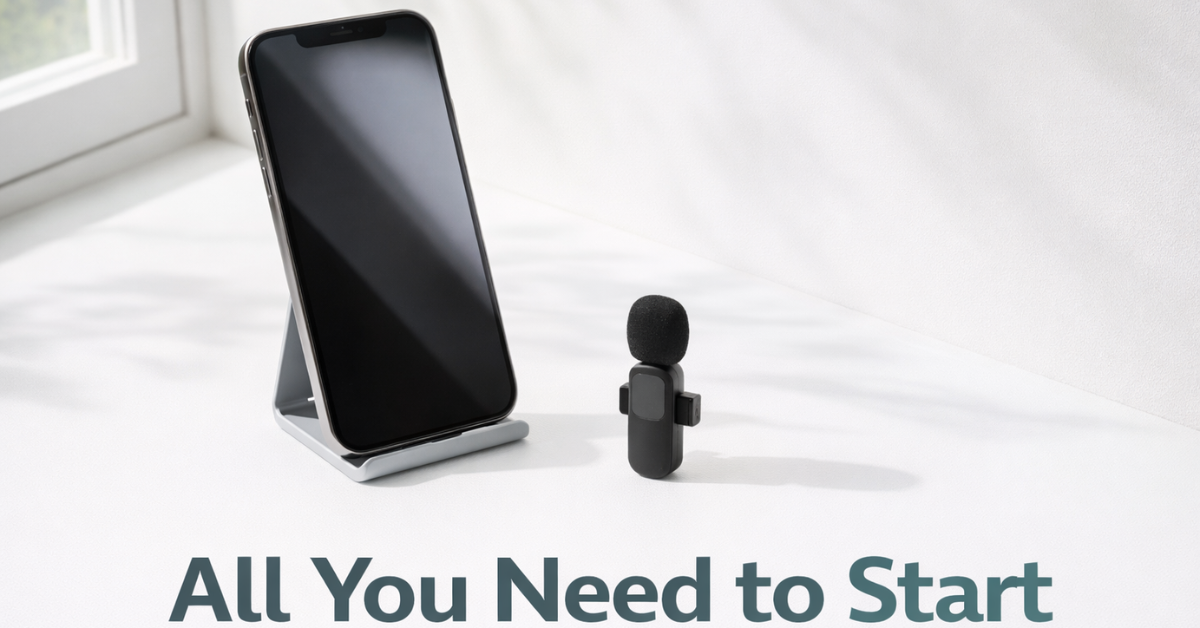
People always ask about equipment. Here's what I'm planning to use while traveling for 8 weeks:
iPhone for video
Wireless lavalier microphone (about $50-100)
Simple phone stand (about $20)
Natural lighting
That's it. No studio. No fancy camera. No expensive lighting setup.
I'm still going to shoot content and produce videos. Because the equipment isn't the barrier - showing up is.
Text Messaging: The Practical Side
Let's get practical about text messaging because I know some of you are hesitant.
The simple approach: Just use your personal cell phone. When someone fills out a form, text them. "Hey [Name], saw you requested the thing. Have you had a chance to check it out yet?"
Start a real conversation.
What if people abuse it? They won't. And if someone does, you can block them. But in over 10 years of Perry giving out his personal number publicly, it hasn't been a problem.
The platform approach: If you want to use the Pictos platform for texting, you'll need to go through A2P registration. It's a one-time process. Then texts cost about a penny each.
For high-value client acquisition, that's totally worth it.
The Mindset Shift
Here's the big shift we're seeing:
Old way: Website first, then try to get clients.
New way: Clients first, website later.
Your website should get you clients. But you can get clients without the website. So get the clients first, make some money, then invest in making your web presence better.
One of our members, Charles, runs a business teaching accountants how to become fractional CFOs. His website has been down for over a year.
And he's doing fine. Better than fine, actually.
Why? Because he shows up on video. He starts text conversations. He builds real relationships.
People aren't buying his website - they're buying him.
What About Looking Professional?
I know some of you are thinking: "Won't I look unprofessional without a website?"
Perry Belcher closes massive deals with Google Docs. Charles closes fractional CFO clients with simple videos and no website.
You'll be fine.
Eventually, having a nice website is good. But it's not the priority when you're just starting out or when you're still figuring out your offer.
Focus on the things that actually close clients: helpful content, real conversations, and building trust.
Your Next Steps
Don't try to do everything at once. Just pick one thing:
Option 1: Record your first helpful video and upload it to YouTube this week.
Option 2: Create a simple Google Doc explaining your offer.
Option 3: Start texting people who've shown interest in your services.
That's it. One action. This week.
The playing field is leveling. The complicated technical stuff is being handled by AI. Your job is to be human, be helpful, and be yourself.
Everything else is just details.
Want help implementing this? Join our community at https://pykthos.com/cafe for weekly support and accountability.


