



What a Cancelled Flight Taught Me About the Future of Marketing
The future of marketing is less technical and more human. AI now handles much of the targeting, design and copy, so professional-looking content stops being the difference. What matters more is showing up on simple video, starting real conversations (text, DMs, in person) and giving people something to belong to. Pick one: a short video answering a client question, a text to someone who showed interest, or one way to show up more as yourself.
Key takeaways
- The technical barriers are disappearing; the playing field is leveling.
- When everyone can look professional, authentic human connection is the differentiator.
- A website isn't required if you show up on video and start conversations.
- Start with one action this week.
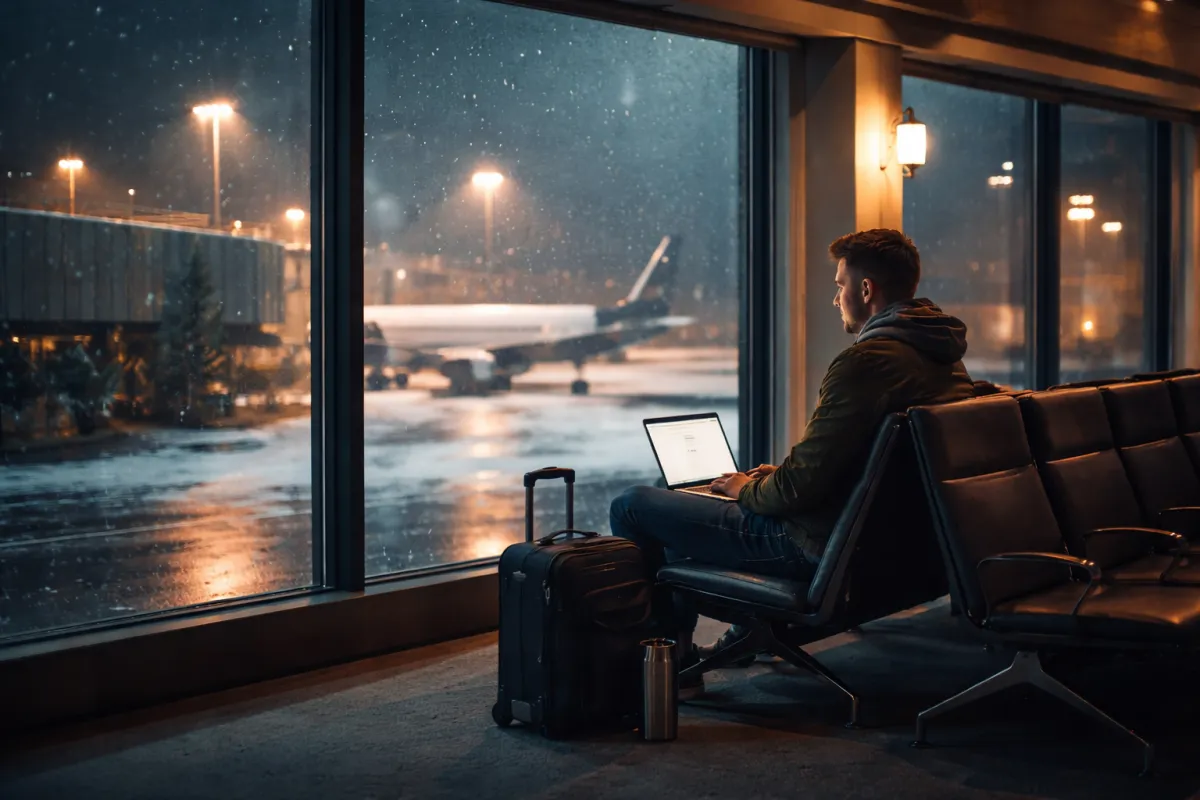
I was supposed to fly home Thursday night. Instead, Air Canada texted me that my flight was cancelled due to a snowstorm in Toronto and Montreal.
I had to check back into the hotel and got rerouted through Montreal the next day. Didn't make it home until 2:30 AM Friday.
But here's the thing, getting stuck turned out to be valuable. Because I got an extra day with some really smart people right as they were all processing some major shifts happening in digital marketing.
Let me share what that looked like.
What happens when AI can do an agency's job?
At our mastermind, we do this contest called "Wicked Smart" where people share ideas they've actually implemented in their businesses. Not theory, real stuff that saved time or made money.
Mitch showed us an AI system he built that reviews 80 ads every morning, analyzes performance, suggests new creatives, and basically does what a marketing agency would do. For free.
Perry Belcher looked at it and said, "You just wrote something that eliminates your job, buddy."
Mitch didn't miss a beat. "Well, the frickin' job's gone away this year anyway, so I may as well."
That honest acknowledgment, that the old way of doing things is changing fast, set the tone for a lot of conversations that followed.
Is the traditional funnel going away? The $2 million YouTube experiment
Perry shared his strategy for 2026. He's planning to spend about $2 million of his own money testing a YouTube approach that abandons traditional funnels.
Here's the plan:
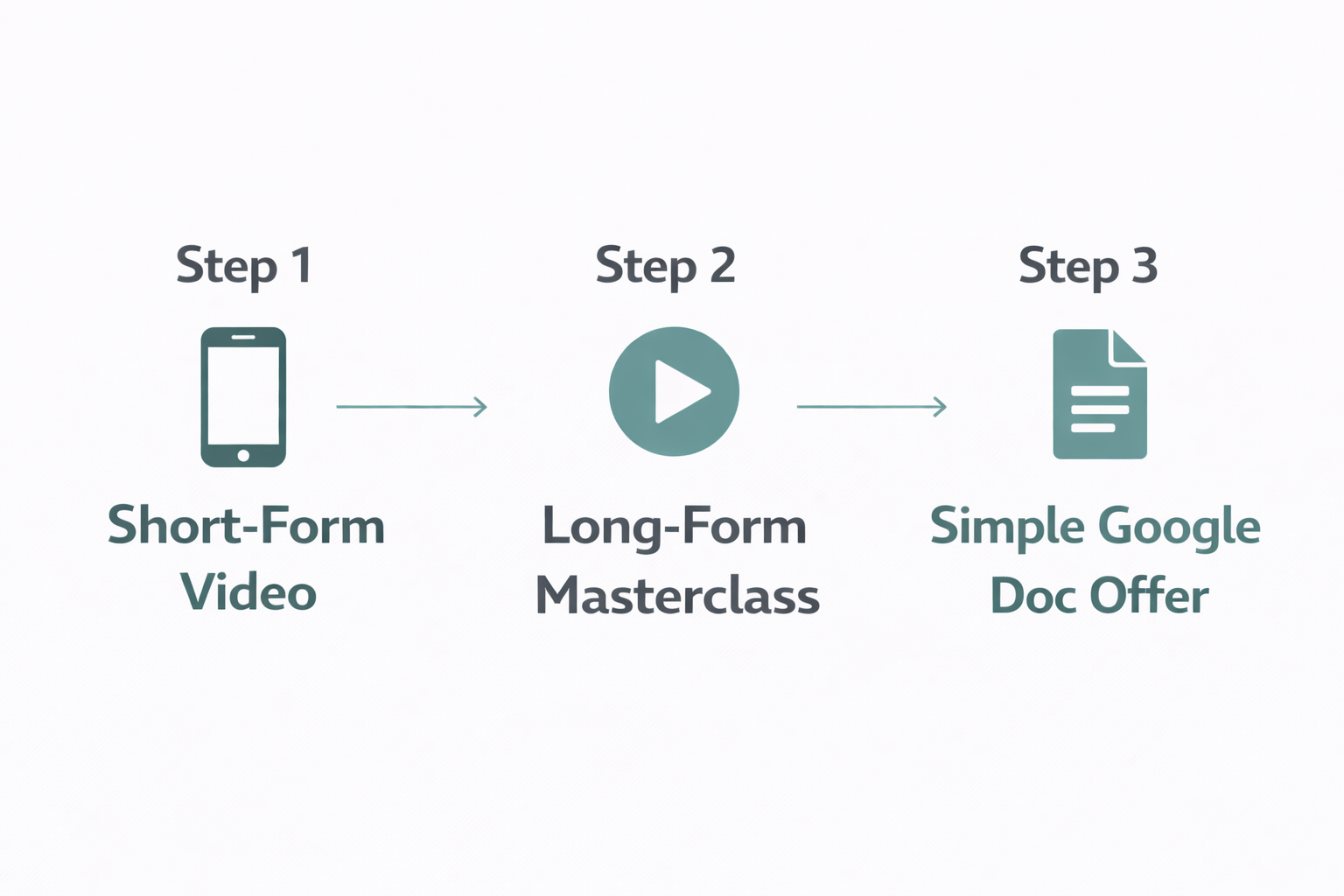
Create short-form videos to warm people up. Drive engaged viewers to long-form masterclass content, 2.5 hours of pure education. Then in the YouTube description, just put a link to a Google Doc that explains the offer.
No fancy landing pages. No complicated funnel sequences.
Just: valuable content, then a simple offer, then a conversation.
If it works, great. If it doesn't, he's out $2 million. But he's doing it anyway because he knows the landscape is changing.
Can you sell without a website?
One of our members, Charles, runs a business teaching accountants how to become fractional CFOs. It's a good business model, instead of working full-time for one company, you work part-time for ten companies and make significantly more money.
His website has been down for over a year.
And he's doing fine.
Why? Because he shows up on video. He starts text conversations. He builds real relationships.
He showed us his Instagram, video after video of simple talking-head content. Nothing fancy. But some of those videos have 45,000 views because he pays to promote them to people who are about to attend his webinar.
By the time someone shows up for that webinar, they feel like they already know him. The sale is basically done before the webinar even starts.
No website required. (More on whether you need a website.)
Why did the turtle video beat the training videos?
Chuck shared something that made everyone laugh but also illustrated an important point.
He creates technical training videos, detailed, helpful content showing people exactly how to do complex things. Those videos might get a couple hundred views.
But he once posted a video of himself picking up a turtle out of the road. No planning, no script, just him being a decent human.
That video? 3,400 views.
He called it "lack of attention span theater." And yeah, people's attention spans are short. But here's what I took from it:
People don't just want information. They want to connect with other humans.
The technical video is useful. The turtle video is human. And humans crave humanity, especially now that we're surrounded by AI-generated everything.
What's actually changing in marketing?
Sitting in that airport Friday morning, waiting for my connecting flight, I was thinking about all these conversations.
Here's what I'm seeing:
The Technical Barriers Are Disappearing
You don't need to know how to target Facebook ads anymore. You don't need to understand complex platform algorithms. You don't need to be a web designer or a copywriter.
AI handles a lot of that now. The playing field is leveling.
Authenticity Matters More Than Ever
When everyone can generate professional-looking content, professional-looking content stops being the differentiator. What becomes valuable is real, authentic, human connection.
The coaches and consultants who will do well aren't necessarily the ones with the best tech. They're the ones who are willing to show up as themselves and build real relationships.
People Want to Belong
This came up multiple times in Nashville. People are desperate to feel like they're part of something. They're tired of transactional relationships.
This is why in-person events are so powerful. It's why video works better than text. It's why text messages get opened more than emails. It's all about human connection.
What am I doing differently?
That extra day in Nashville changed how I'm approaching some things.
I'm shooting more video. Simple stuff, just me talking about things our community needs to hear. I'm using my iPhone, a wireless mic, and a simple stand. That's it.
I'm initiating more text conversations. When someone fills out a form, I'm reaching out to start a real dialogue.
I'm focusing less on building perfect systems and more on building real relationships.
Because at the end of the day, technology can't replace genuine human connection. And in a world where more and more things are automated, that connection is what matters.

The Practical Takeaway
Here's what I want you to take from this:
The world is changing fast. AI is handling more and more of the technical stuff. That's actually good news because it means you don't need to be a tech expert anymore.
But you do need to be willing to show up as yourself.
Get on video. Start conversations. Build real relationships. Focus on being authentically you instead of trying to be perfectly polished.
Because while everyone else is trying to out-AI each other, you can be the one actually connecting with real humans who have real problems.
Your Next Step
Don't try to do everything at once. Just pick one thing:
Option 1: Record a simple video this week answering one question your clients always ask.
Option 2: Text someone who's shown interest in your services and start a real conversation.
Option 3: Think about how you can show up more authentically in your marketing.
That's it. One action.
Sometimes the best lessons come from unexpected delays. Getting stuck in that snowstorm reminded me that the detours and disruptions are often where the real insights are.
Both in travel and in business.
Related reading
- How AI is leveling the marketing playing field
- How to get more coaching clients through conversations
Frequently asked questions
How is AI changing marketing for coaches?
It's removing the technical barriers: you no longer need to know ad targeting, platform algorithms, web design or copywriting the way you used to. That makes authentic human connection the differentiator.
Do I need a website to sell my services?
Not always. One member's website had been down for over a year, and he was doing fine by showing up on video, promoting those videos to webinar registrants and starting text conversations.
What equipment do I need to start making video?
Very little: the author uses an iPhone, a wireless mic and a simple stand.
Want to figure this stuff out with other people who get it? Join us at https://pykthos.com/cafe for our weekly sessions.
Published March 13, 2026. Last updated October 26, 2026.


